Compost
Nutrient-rich, ready-to-use organic compost
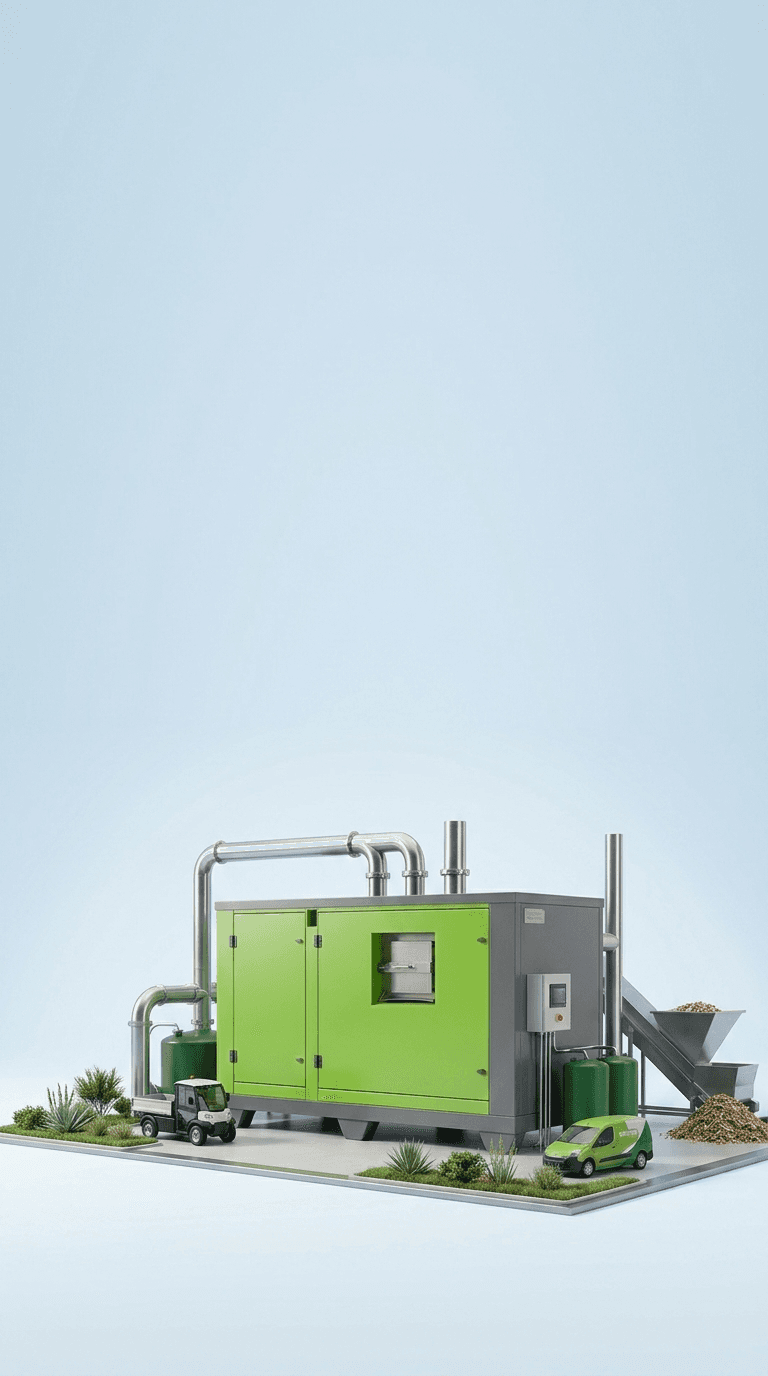
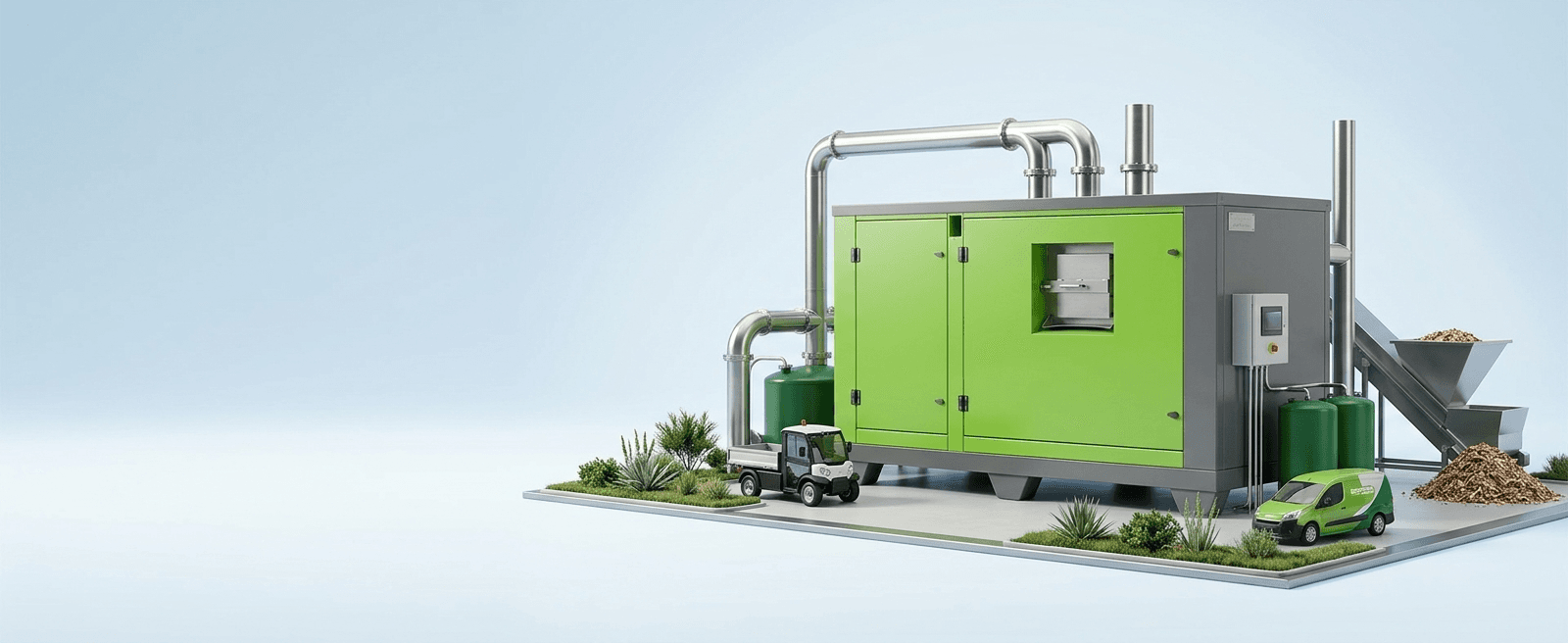
Our in-vessel composting machines convert food and organic waste into high-quality compost with controlled, odour-managed biological processing — built for hotels, townships, institutions and commercial kitchens.
One Machine. Three Real Outcomes.
Compost
Nutrient-rich, ready-to-use organic compost
Volume Reduction
Up to 70–80% reduction in waste mass
Clean Operations
Odour-controlled, low-manpower processing
Many machines in the market simply dry or shred waste and call it 'compost.' Ours is different — a true biological composting system.
Uses bio-culture / microbial action that actually decomposes organic matter — not heat-based dehydration that leaves waste biologically inactive.
Once waste is loaded, mixing, aeration, curing and compost discharge happen automatically inside the machine — minimal manual intervention required.
Tolerates minor contamination without compromising output quality — unlike heater-based dehydrators that are sensitive to inputs.
Energy-efficient design uses a fraction of the electricity consumed by heater/dehydrator-type machines, lowering cost per kg processed.
Integrated deodorizing systems ensure a hygienic, odour-free composting process — suitable even for indoor or space-constrained sites.
Optional PLC-HMI integration enables data logging, remote monitoring and touch-panel control for real-time visibility.
MS, MS/FRP, SS304 or SS316 construction options based on hygiene, corrosion-resistance and regulatory needs.
Not sure which model fits your site? Share your daily waste volume and we’ll recommend the right configuration.
| Parameter | Semi-Automatic Composter | Fully Automatic Composter |
|---|---|---|
| Operation | Manual loading, manual turning/mixing assist | Automated loading, mixing, curing & discharge |
| Ideal For | Small to mid-scale waste generators, budget-conscious buyers | Hotels, townships, institutions, bulk generators |
| Manpower Requirement | Moderate — needs an operator for routine turning | Minimal — largely unattended after feeding |
| Control Panel | Basic control panel | HMI-PLC touchscreen with monitoring options |
| Capacity Range | 30 kg/day – 500 kg/day (typical) | 100 kg/day – 5,000+ kg/day |
| Investment | Lower upfront cost | Higher upfront cost, lower long-term labour cost |
| Best Suited Sites | Residential societies, small campuses, standalone restaurants | Hotels, hospitals, malls, industrial canteens, municipal sites |
A biological loop that keeps organic waste out of landfills and puts it back into the soil.
01
Organic/food waste is loaded into the inlet hopper, manually or with accessories for bulk feeding.
02
Shredding (where applicable) plus mixing with bio-culture to kickstart microbial decomposition.
03
Controlled aeration, moisture and temperature inside the closed vessel enable efficient breakdown.
04
Material stabilises over retention (typically 10–15 days) until it matures into safe, usable compost.
05
Finished compost is automatically or manually discharged for bagging, agricultural use or landscaping.
BIOLOGICAL LOOP
Waste In → Microbial Action → Nutrient-Rich Compost Out
A closed-loop system that protects biology and returns nutrients to the soil.
Standard configurations plus custom capacities for institutional and municipal projects.
| Model Type | Construction | Panel/Control | Automation Level |
|---|---|---|---|
| Standard | MS / FRP | Basic control panel | Semi-Automatic |
| Standard+ | MS / FRP | HMI panel | Fully Automatic |
| Supreme | MS | HMI panel | Fully Automatic |
| Elite | SS304 / MS | HMI panel | Fully Automatic |
| Elite+ | SS304 | HMI panel | Fully Automatic |
| Premium | SS316 | HMI panel | Fully Automatic |
Capacity Options (kg/day)
Custom capacities above 5 MT/day available for large institutional and municipal projects — contact our team for a tailored solution.
Designed for odour-controlled, on-site composting across food, institutional and municipal environments.
Hotels & Resorts
manage kitchen and banquet food waste on-site
Residential Societies & Townships
convert daily kitchen waste into compost
Corporate Campuses & IT Parks
handle canteen waste responsibly for ESG goals
Hospitals & Healthcare Facilities
safe, hygienic and odour-controlled operation
Educational Institutions
manage hostel and canteen waste while teaching sustainability
Malls & Commercial Complexes
process high-volume food court waste
Municipal & Managed Landfill Sites
deploy at scale to reduce landfill burden
Agro-Industries & Food Processing Units
convert residues into a value-added by-product
A short pre-installation audit helps us recommend the right accessories for your waste stream.
✅ Suitable for Composting
🚫 Not Suitable for Composting
Composting supports compliance, sustainability and operational efficiency.
Accessories can be added at purchase or integrated later as your volumes grow.
Shredder
Pre-processes bulky or fibrous waste for faster composting.
Bin Lifter
Automates loading of waste bins into the hopper for bulk generators.
Roto Seiver / Trommel
Screens finished compost for uniform particle size.
Screw Feeder
Enables continuous, automated feeding for high-capacity sites.
De-Watering Unit
Reduces moisture content in wet waste before composting.
Clear answers for composting, automation, feedstock suitability and safe output.
A dehydrator removes moisture using heat and does not produce biologically active compost. Our composter uses microbial / bio-culture technology to decompose waste into stable, nutrient-rich compost.
Not entirely — the system can tolerate a small percentage of non-organic contamination. Better segregation improves compost quality and machine longevity.
Typically 10 to 15 days depending on model, waste type and retention settings, after which finished compost is ready for discharge.
It depends on daily waste volume, manpower and budget. Higher daily volumes and limited on-site staff usually favour fully automatic models.
Capacity depends on estimated daily organic waste generation. Share daily waste (kg) and site details and we’ll recommend the right configuration.
Routine maintenance is minimal: periodic cleaning, bio-culture replenishment and standard mechanical upkeep. AMC support can be provided by our team.
Yes. When operated as per recommended retention period and feedstock guidelines, output is stable and pathogen-reduced, suitable for agricultural, landscaping or gardening use.
Start Your Composting Project
Tell us about your waste stream and site — we’ll help you determine the right composter model, capacity and accessories.